------

Meaning of Money
Part 2
The distinction between

    a. coinage
    b. currency
    c. money


a. Coinage

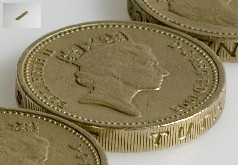
Coinage is the production of physical money in the form of 'coins' from some material such as a metal.

Coinage

In the past in some cultures there has been a policy of 'free' coinage by the government (sometimes with the payment of a small fee) for metals like gold and silver.

This fee is called seigniorage: the revenue or a profit taken from the minting of coins, usually the difference between the value of the bullion used and the face value of the coin.

Coins may depreciate through wear or in the case of gold it has been subject to 'sweating' where a small amount is shaved or removed by intermediate users.

------

b. Currency

Currency is printed 'paper' money.
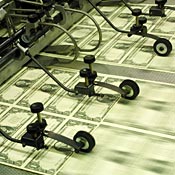
But when we talk about the government printing money -
it is just figurative,
because most money isn't printed.

from:
Modern Money Mechanics
by the
Federal Reserve Bank of Chicago

"In the U.S. neither paper currency nor deposits have value as commodities. Intrinsically, a dollar bill is just a piece of paper. Deposits are merely book entries. Coins do have some intrinsic value as metal, but generally far less than their face amount. What, then, makes these instruments 'checks, paper money, and coins' acceptable at face value in payment of all debts and for other monetary uses? Mainly, it is the confidence people have that they will be able to exchange such money for other financial assets and real goods and services whenever they choose to do so. This partly is a matter of law; currency has been designated 'legal tender' by the government - that is, it must be accepted."

------

c. Money

Most people recognize there are more forms of money than coins and currency. In fact, today, most 'money' exists simply as fiat bookkeeping entries on banks' computers. These electronic 'blips' are brought into existence by the rules of the monetary system - whatever those rules may be.

REAL
money is
BLIPS!
Some readers have said that they have had trouble understanding what 'fiat' means and have asked that I define it better early on - so let me emphasize at the outset that 'fiat' simply means money that is made out of nothing. It has no 'gold' backing or such. If that sounds terrible then please be alerted that this trilogy advocates 'fiat' money and explains how and why it should be created.

Click here to:

go back to the Index

or to go on to Part 3